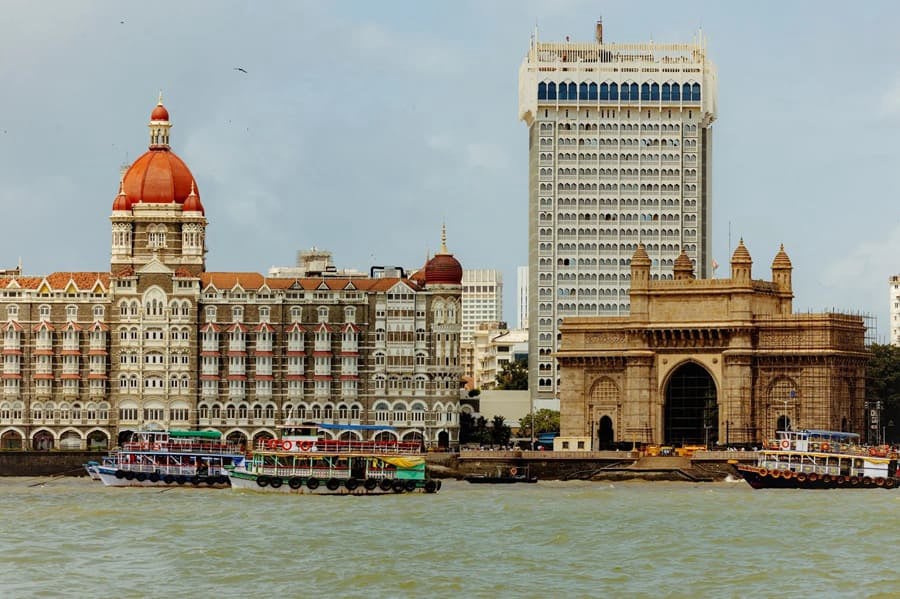
Mumbai is often called the financial capital of India, but it has also earned another, more contemporary title: the Sugar Daddy Capital of India. This distinction is not just symbolic—it is driven by scale. Mumbai has over 60,000 registered sugar daddies and more than 210,000 sugar babies, and these numbers are increasing exponentially every year. Mumbai hosts the largest number of sugar daddies and sugar babies in India. In comparison, Delhi, which ranks second, has a combined sugar dating population of around 200,000, highlighting how far Mumbai leads in this space.
As India's most powerful economic engine, Mumbai brings together an extraordinary number of high-net-worth individuals alongside millions of ambitious students and young professionals. The city's role as a global financial center, business hub, and entertainment capital creates both opportunity and pressure. High living costs, intense competition, and aspirational lifestyles shape how relationships evolve in this environment, encouraging more transparent and goal-oriented connections.
Within this context, sugar daddy–sugar baby relationships in Mumbai have grown rapidly and visibly. What was once considered niche is now a recognized part of the city's modern dating landscape, reflecting broader social and economic shifts. Mumbai's unmatched scale, wealth concentration, and openness to new relationship models explain why it stands firmly at the top—well ahead of other Indian cities—in the growth of sugar dating culture.
Mumbai stands at the center of India's economic engine, generating a significant share of the nation's financial activity and attracting capital from across the world. It is home to major banks, stock exchanges, multinational headquarters, and a thriving startup ecosystem, alongside Bollywood and India's largest advertising and media industries. This concentration of industries has created an environment where wealth accumulation is not only visible but also normalized, making Mumbai unlike any other Indian city.
The city also has the highest concentration of high-net-worth individuals and billionaires in India, and one of the largest in Asia. Successful entrepreneurs, senior corporate leaders, investors, and entertainment executives form a substantial segment of Mumbai's social fabric. These individuals often possess not only financial resources but also influence, experience, and access to elite networks—factors that naturally align with the role of sugar daddies in modern relationship dynamics.
At the same time, Mumbai's economic strength attracts ambitious talent from every corner of the country. Young professionals and students arrive looking for career growth, exposure, and upward mobility, but many quickly encounter the reality of intense competition and high living expenses. This coexistence of extraordinary wealth and relentless ambition creates a natural foundation for sugar dating to flourish, as relationships built on support, guidance, and clear expectations fit seamlessly into Mumbai's fast-paced economic landscape.
Mumbai is a city where extreme wealth and financial struggle exist side by side. Luxury high-rises, premium shopping districts, and exclusive social clubs are often located just minutes away from overcrowded neighborhoods and modest housing. This stark contrast makes economic differences highly visible and shapes how people perceive success, stability, and opportunity.
Housing in Mumbai is among the most expensive in the country, with rent consuming a large portion of monthly income for students and young professionals. Beyond accommodation, daily expenses such as transportation, dining, personal appearance, and social activities add constant financial pressure. Maintaining a comfortable or aspirational lifestyle in Mumbai is significantly more costly than in most other Indian cities.
Mumbai's fast-paced environment encourages ambition and visible success. Social media, entertainment culture, and elite professional circles reinforce expectations around appearance, lifestyle, and social mobility. For many young people, especially newcomers to the city, keeping up with these standards can be challenging without additional financial support.
In this context, sugar daddy–sugar baby relationships emerge as a practical response to urban realities. Rather than being driven purely by luxury, many participants view these connections as a way to gain financial stability, reduce stress, and access mentorship or guidance in a demanding city. Mumbai’s wealth gap and high living costs therefore play a direct role in accelerating the growth of sugar dating culture.
India's employment landscape presents a complex challenge, particularly for young people entering the workforce. While the country produces a large number of graduates every year, job creation has not always kept pace with this growth. Many degree holders face underemployment, contractual roles, or long job searches, especially in competitive metropolitan areas where expectations are high but opportunities are limited.
Mumbai, despite being India's strongest economic city, reflects this imbalance clearly. The job market is intense, with employers demanding experience, specialized skills, and long working hours, often without offering salaries that fully match the city's high cost of living. For fresh graduates and early-career professionals, sustaining themselves independently in Mumbai can be difficult, even when they are employed.
Within this reality, some young people look for additional forms of support beyond traditional employment. Sugar relationships, for them, are not simply about luxury but about financial breathing room, professional exposure, and stability. In a city where ambition is high and pressure is constant, these connections can help individuals navigate career uncertainty while continuing to pursue long-term goals.
In 2025, India's overall labour force participation rate (LFPR) was about 55.3%, but female participation lagged significantly behind at roughly 34.1% — the highest seen in recent months but still far below male levels and global averages. This disparity is particularly stark in urban areas like Mumbai, where women face cultural, structural, and economic barriers to entering and staying in formal employment.
A large portion of women in India are engaged in self-employment or informal work, often earning significantly less than men and lacking job security. Even though female workforce participation has risen over the last several years, wages and formal employment opportunities for women remain limited, especially in higher-paying sectors. This means many urban women struggle to achieve financial independence despite being educated and capable.
In a competitive city like Mumbai, these employment challenges intersect with high living costs and intense career pressure. For some young women, traditional job income alone may not be enough to cover essential expenses, social expectations, or ambitious lifestyle goals. Against this backdrop, the "sugar daddy-sugar baby" relationship may be viewed not only as a luxury but also as a practical survival strategy.
Mumbai is a city driven by aspiration. Surrounded by luxury malls, fine-dining restaurants, exclusive events, and premium residential areas, residents are constantly exposed to symbols of success and wealth. Social media, professional networking circles, and high-profile public figures amplify these images, shaping lifestyle expectations—especially among young people who are building their identities and careers in the city.
Bollywood and the entertainment industry further intensify this effect. As the heart of India's film, fashion, and media world, Mumbai normalizes glamour and high-end living in everyday conversation. Designer brands, international travel, and elite social circles are presented not as distant fantasies, but as attainable goals. This environment encourages relationships that can offer access, guidance, and support within these aspirational spaces.
Within this cultural backdrop, sugar daddy–sugar baby relationships often feel aligned with Mumbai's lifestyle logic. For some, these relationships provide a way to participate confidently in the city's social and professional life without constant financial stress. Rather than being seen purely as indulgent, they reflect how ambition, visibility, and lifestyle expectations intersect in one of India's most image-conscious cities.

Mumbai has one of the highest rates of smartphone usage and internet penetration in India. Easy access to mobile technology allows people to explore new forms of dating and networking privately, making online platforms a natural entry point for sugar daddy–sugar baby connections.
Traditional social circles often come with judgment and limitations. Digital platforms remove these barriers by enabling users to connect beyond their immediate networks. In a dense and fast-moving city like Mumbai, online discovery is efficient, discreet, and better suited to busy urban lifestyles.
Discretion is especially important in a socially complex city where personal reputations and professional identities matter. Modern platforms offer features such as profile visibility controls, photo verification, and selective communication, giving users confidence and control over their interactions.
By making sugar dating more structured and transparent, technology has helped normalize these relationships. Clear profiles, shared expectations, and secure communication reduce uncertainty and stigma, allowing sugar daddy–sugar baby culture to grow steadily as part of Mumbai's broader digital dating ecosystem.
The expansion of sugar daddy–sugar baby culture in Mumbai is not just a social observation—it is clearly reflected in platform data. According to SugarDaddyMeet statistics, by the end of 2025, Mumbai had over 60,000 registered sugar daddies and more than 210,000 registered sugar babies, making it the largest sugar dating market in India by a wide margin. These figures place Mumbai firmly ahead of all other major cities, reinforcing its position as the country's undisputed center for this dating dynamic.
What makes this growth particularly notable is its pace. The number of users in Mumbai has been increasing at an exponential rate year over year, driven by a steady influx of young professionals and students, as well as financially successful individuals connecting with over 270,000 combined sugar daddies and sugar babies—Mumbai's scale and momentum stand out clearly.
These numbers also signal a broader shift in social acceptance. What was once considered niche is now increasingly mainstream within urban dating culture. In Mumbai, sugar dating is no longer limited to a small circle; it reflects changing attitudes toward relationships, financial collaboration, and lifestyle alignment in one of India's most competitive and opportunity-driven cities.
Mumbai has the largest Sugar Daddy–Sugar Baby population in India by a significant margin. By the end of 2025, the city recorded over 270,000 combined sugar daddies and sugar babies, far surpassing other major metros. In comparison, Delhi—the second-largest market—has around 200,000 users, while Bangalore has approximately 180,000, and Chennai just over 150,000. This clear numerical lead reinforces Mumbai's dominant position.
While cities like Delhi and Bangalore have strong professional classes, Mumbai stands apart in terms of old wealth, corporate leadership, investors, and entertainment industry elites. The depth and diversity of high-net-worth individuals in Mumbai create a stronger and more sustainable base of potential sugar daddies than in other cities.
Mumbai's cosmopolitan culture and global exposure make it more accepting of non-traditional dating dynamics. Compared to cities where social conservatism still plays a stronger role, Mumbai's residents—especially young professionals—are generally more comfortable with transparent, mutually fulfilling relationships.
The combination of intense competition, high living costs, and aspirational lifestyles accelerates behavioral change. While sugar dating exists in Delhi, Bangalore, and Chennai, in Mumbai it integrates more deeply into urban life, evolving faster and at a larger scale. This is why Mumbai consistently leads not just in numbers, but in the overall maturity of sugar dating culture in India.
Looking ahead, sugar dating in Mumbai is expected to continue its rapid growth, driven by ongoing urbanization, economic inequality, and the city's constant influx of ambitious young talent. As living costs rise and traditional career paths take longer to deliver financial stability, more people are likely to view sugar relationships as a practical and transparent option rather than a temporary trend. Mumbai's role as India's economic and cultural trendsetter means changes here often influence dating norms across the country.
The future will also see greater diversity within the sugar dating community. Participants are no longer limited to a narrow age group or background; professionals, entrepreneurs, creatives, and internationally exposed individuals are increasingly involved. Expectations are becoming more refined, with stronger emphasis on respect, privacy, personal growth, and emotional compatibility alongside financial support.
Technology will further shape this evolution. Advanced verification tools, privacy controls, and smarter matching systems will make platforms more secure and user-focused. As trust and structure improve, sugar dating in Mumbai is likely to become more mature, mainstream, and sustainable—cementing the city's position as the leading force shaping the future of sugar relationships in India.
Mumbai's rise as the sugar daddy capital of India is the natural result of its unmatched wealth concentration, intense ambition, evolving social attitudes, and modern economic realities. In a city where opportunity and pressure coexist, sugar daddy–sugar baby relationships reflect a broader shift toward clarity, pragmatism, and mutually beneficial connections. As this culture continues to grow and mature, more people are looking for secure, discreet, and trustworthy ways to explore it. SugarDaddyMeet stands out as a leading platform designed to connect like-minded individuals in Mumbai and beyond—offering a safe, transparent starting point for those ready to engage confidently with this modern relationship dynamic.